
While absence is an unavoidable part of working life, if it’s not managed correctly, it can create serious challenges for HR teams and the wider business operations. Organisations that take a structured approach to monitoring, recording, and responding to employee time off can reap substantial benefits. When done well, employee absence management supports legal compliance, improves planning, and promotes employee wellbeing, all while reducing administrative burden and maintaining business continuity.
Absence management meaning – what HR needs to know
What is absence management? It refers to the processes and policies used to manage employee time off, including both planned and unplanned absences. It ensures that absences are tracked, managed fairly, and aligned with legal, operational, and wellbeing goals.
In an HR context, it’s about maintaining visibility over leave patterns, ensuring compliance with employment regulations, and supporting both business continuity and employee welfare.
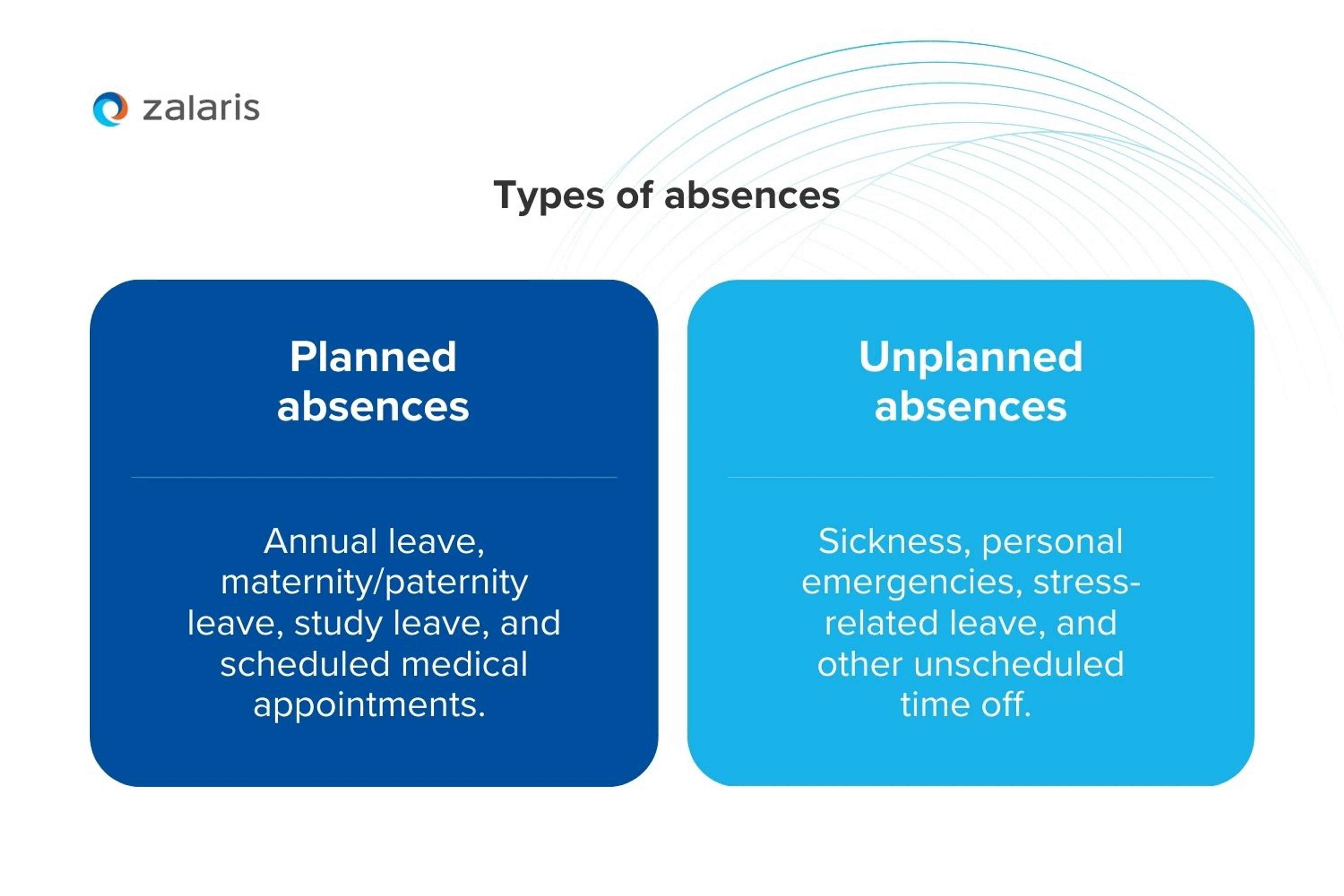
A strong absence management approach recognises the importance of both types. It should support employees appropriately while maintaining service delivery and team consistency.
Why effective employee absence management matters
Understanding the patterns and behaviours behind employee time-off can have a significant impact on the business. Employees who are not at work aren’t just costing money. They can be a sign of operational inefficiencies, such as misalignment in employee knowledge and business goals.
The cost of unmanaged employee absence
When absences aren’t tracked or managed systematically, they can create serious challenges for organisations:
- Disruption to operations and productivity
- Uneven workloads and team frustration
- Increased pressure on line managers
- Poor data visibility for workforce planning
In the UK alone, the hidden cost of employee sickness stands at £103bn per year, highlighting the significant impact on both productivity and profitability.
Legal and compliance considerations
Employee absence management isn’t just about controlling costs. Legal and compliance requirements also play a critical role, and managing absence properly reduces legal risk. UK employers are responsible for:
- Managing statutory sick pay (SSP): Employers must pay eligible employees £118.75 per week if they are too ill to work. SSP is paid for up to 28 weeks.
- Keeping accurate sickness records: Employers must maintain records of sickness absences related to SSP to comply with legal obligations.
- Ensuring equality in leave handling: Employers must apply consistent policies to all employees to prevent discrimination and promote fairness.
- Complying with health and safety responsibilities during return-to-work processes: Employers have a duty to ensure, so far as it is reasonably practicable, the health, safety, and welfare at work of all employees. This includes facilitating a smooth return to work after sickness absence.
A compliant absence management system helps meet these obligations while protecting both employee rights and business interests.
The benefits of a proactive approach
A proactive approach ensures these potential costs and compliance issues don’t materialise. Effective absence management contributes to:
- Improved productivity by ensuring adequate shift coverage, for example by redistributing workloads or arranging temporary cover when sickness absence is logged early.
- Stronger employee engagement through transparent processes, such as clear communication of entitlements, consistent recording of absences, and visible self-service systems that reassure employees leave is handled fairly.
- Early identification of employee wellbeing by monitoring absence data, for instance spotting repeated Monday absences or extended sick leave that may indicate stress, enabling HR to intervene with support or occupational health referrals.
- More consistent policy application that reduces conflict, achieved by giving managers structured return-to-work interview templates and clear escalation procedures, so all employees are treated equally regardless of department or line manager.
Creating a strong absence management policy
What can organisations do to ensure employee time-off is monitored correctly? It all starts with implementing best practices and creating a framework around absence management. A clear, consistent absence policy helps set expectations, promote fairness, and simplify management.
Key elements of an effective absence management policy
An effective absence management policy should include several key elements to ensure consistency, fairness, and support for employees:
- Defined procedures for reporting and documenting absence
- Clear distinctions between types of leave (e.g. sick, compassionate, unpaid)
- Return-to-work interviews to understand reasons and identify support needs
- Monitoring and review mechanisms to track patterns or issues
- Manager training on how to handle sensitive or complex cases
The policy should be accessible, regularly updated, and aligned with broader HR and wellbeing strategies.
Linking employee absence management with broader HR processes
While these key elements form the foundation of a strong absence management policy, absence management is most effective when connected with other HR processes. Linking absence data with performance insights, time-tracking information, and employee wellbeing initiatives helps managers spot recurring patterns, identify potential issues early, and make informed decisions that support employees and maintain productivity.
To put this integration into practice, organisations can use HR platforms or managed services that centralise absence data alongside broader workforce information. These systems provide real-time visibility, automated workflows, and reporting capabilities, helping ensure compliance, reduce administrative effort, and improve planning accuracy. All while maintaining a fair and consistent approach to managing employee time off.
Absence management examples from successful organisations
Real impact depends on how the policy is applied in practice. Let’s examine two examples on solving absence challenges:
Example: Embedding structure through return-to-work interviews
The UK Government’s Fit note: guidance for employers and line managers (updated in 2023) highlights how structured return-to-work processes can directly improve outcomes. In one case, an employee’s fit note recommended a phased return to work due to anxiety.
The employer supported this by arranging regular “keep-in-touch” meetings and tailoring the return schedule to the employee’s needs. This structured, proactive approach not only supported recovery but also ensured a smoother reintegration into the workplace.
Example: Proactive health interventions reduce absence
UK energy company Centrica has made a proactive shift in absence management by embedding early health support into their approach. When an employee reports illness, they receive a tailored questionnaire on their very first day off, covering aspects like diet, sleep, weight, and mental wellbeing.
Depending on the responses, the individual may be referred for physiotherapy within five days, or offered mental health support within 48 hours. This early intervention strategy has notably reduced sickness absence and enhanced overall employee wellbeing.
Choosing the proper absence management solutions for your organisation
When it comes down to selecting the right framework, organisations must first consider the value of the two most common approaches. Organisations can monitor absences either manually or with a specialist HR software. To understand how different approaches compare, here’s a side-by-side look at manual tracking versus specialist HR software:
Manual tracking vs HR software
| Method | Manual tracking | HR software |
|---|---|---|
| How | Spreadsheets or email-based leave request systems | Specific digital platforms to automate and offer employee self-service tools |
| Result | Time-consuming and prone to error, making it harder to generate reports or flag potential issues early. | Real-time visibility, automated approvals, audit trails, and integration with other HR functions, creating a more responsive and efficient way to manage absence. |
Features to look for in absence management software
Software can solve many of the major issues that lead to compliance mistakes or employee dissatisfaction. But not all digital solutions are alike. An effective software system should include:
- A centralised leave calendar
- Self-service functionality for employees and managers
- Automated notifications and workflows
- Absence pattern tracking and reporting dashboards
- Integration with payroll and workforce planning
Examples of absence management tools and services
To illustrate how absence management software delivers key features in practice, here are some examples of solutions:
- The Zalaris Attendance Solution: Real-time absence tracking across desktop and mobile, along with quota overviews and audit-ready records. Employees can view their work time records, using self-service tools to control things like their annual leave requests.
- SAP Time Tracking: Automated time capture and self-service leave requests, while integrating with payroll to ensure accuracy. Managers receive alerts based on compliance rules to identify potential risks, such as regular Monday absence or unusual increases in time-off requests, which could be a sign of workplace stress or staff inefficiencies.
- WorkAxle: An AI-driven solution for organisations requiring flexible shift scheduling and dynamic absence management. It can update and alert employees based on staffing needs, ensuring adequate shift coverage and reducing disruption from unexpected absences.
- The PeopleHub Time Off module: A centralised leave calendar, self-service portals, and automated notifications. It is particularly suited for small and midsize organisations, as it scales as workforce needs grow. The calendar can help keep track of different contract types and obligations, such as remote workers and freelance contracts.
Each solution integrates seamlessly with payroll, workforce planning, and performance processes. Organisations can create a unified foundation for strategic HR operations.
Efficient employee absence management drives organisational productivity
Absence is inevitable, but disorganisation isn’t. A well-structured absence management approach helps maintain operational continuity, supports employee wellbeing, and meets legal obligations. All while improving transparency and trust across the workforce.
Zalaris offers comprehensive absence management support, from policy development and reporting tools to full integration. With local knowledge and scalable delivery, we enable HR teams to manage absence with confidence and clarity.
Get in touch with our expert team to explore the best absence management solutions for your organisation.
FAQ