


 Back to Resource Library
HR Digital Transformation: 7 key stages to achieve success in 2025
In today’s fast-paced digital world, digital transformation is becoming a core aspect of business strategy. The role of HR has transformed from an administrative function into a strategic function driven by technology and data.
Zalaris
27.11.2025·8 min read



With Cloud HCM software or other technologies, HR processes that were previously manual and time-consuming, including fragmented and outdated paper-based hr processes, become faster and more automated, allowing HR departments to focus on strategic areas like employee development, boosting performance and streamlining processes.
Digital hr transformation requires a clear vision and effective change management to ensure successful adoption. Business leaders play a crucial role as sponsors and guides, supporting and governing digital hr transformation initiatives to drive organisational agility and enhance the employee experience.
Introduction to Digital Transformation
Digital transformation is reshaping the way organisations operate, and human resources is no exception. HR digital transformation is more than just adopting new technologies, it’s a strategic process that reimagines HR functions, processes, and strategies to create a more agile, efficient, and employee-centric HR department. By integrating digital technologies into every aspect of HR operations, organisations can enhance the overall employee experience, streamline HR processes, and drive business success. A successful HR digital transformation requires a clear vision, effective change management, and a commitment to continuous improvement, ensuring that the HR department evolves alongside the needs of the business and its workforce.
Benefits of HR Digital Transformation
By embracing digital transformation, your HR team can gain:
- Enhanced efficiency and productivity
- Improved decision-making through data analytics
- Greater employee engagement and satisfaction
These changes deliver significant business benefits, including improved efficiency, cost savings, and increased strategic value for the organisation. Digital transformation also enhances HR services by leveraging technology to provide better employee access, engagement, and personalised experiences. To ensure long-term success, it is essential to align digital transformation initiatives with your overall HR strategy, integrating technology and data-driven approaches to support organisational goals.
Data-driven decision making: Digital processes can help you leverage HR analytics with ease, and provide key insights into metrics like workplace trends, productivity levels and employee behavior, delivering data-driven insights that drive workforce planning and strategic HR decisions to fuel data-driven decision making.
Improving employee experience: Digitising your HR processes helps employees manage self-service activities like managing leaves, benefit, travel expenses etc., with ease. Workers today are accustomed to a seamless digital experience in all parts of their lives and expect their workplace to keep up with these changes as well.
Talent acquisition and retention: Digital tools like Applicant Tracking Systems can supercharge your recruitment process with AI-powered screening, unified portals to manage applications and more. Real-time insights into employee performance and workplace trends help boost retention efforts, while digital transformation supports talent management by improving recruitment, development, and retention strategies.
Agile and flexible: Moving your HR processes to the cloud makes them faster, easier to implement in different regions and effortlessly scalable. With more and more companies around the world embracing remote and flexible work, digital transformation allows your employees to choose flexible work without compromising business objectives.
Types of HR Digital Transformation
In practice, HR digital transformation can take many forms depending on the functions it serves. It is integral to choose the digital opportunities that drive the most impact for your organisation. As part of the overall hr transformation process, organisations should prioritise digital initiatives and strategic initiatives to ensure that their efforts deliver meaningful and sustainable results. Here are four examples of digital transformation:
HCM Systems
HCM systems combine various daily HR functions into a single platform, including payroll, workforce management, absence management, travel expenses, learning and development and more. By automating and streamlining human resources processes, HCM systems enable employees to manage their personal data and goals through self-service functions that eliminate the need for manual tracking.
HCM solutions improve efficiency, lower errors, optimise data accuracy and automate daily HR operations. Digital systems and digital HR tech support the integration and automation of HR operations, further enhancing efficiency and security. This cuts down on the workload of HR departments by automating administrative tasks such as payroll, scheduling, and data entry, allowing them to focus on strategic functions instead. Some examples include Zalaris PeopleHub, SAP, Workday and Oracle HCM Cloud.
HR Analytics
HR analytics is the key to making data-driven HR decisions, by using analytics tools to measure important metrics like employee performance, organisational productivity, employee turnover and talent forecasting. Leveraging HR data allows organisations to gain deeper insights, while analysing workforce trends helps inform decision-making.
When used in tandem with HRM systems, HR analytics provide integral insights into your organisation’s performance and enable HR departments to make strategic decisions, save costs, reduce attrition and much more. Talent forecasting also helps identify skills gaps to support effective workforce planning.
Application Tracking Systems (ATS)
Applicant Tracking Systems help manage the entire recruitment process seamlessly, from job postings to screening applications and coordinating interviews. Incorporating ATS into hiring helps HR teams assess candidates efficiently, improve the applicant’s experience and streamlines hiring workflows, and replace manual HR processes with automated, data-driven systems.
ATS reduces the administrative burden of hiring and boosts recruitment quality and speed. This enables HR to focus their efforts on promising candidates, and their integration into their organisation. Examples include iCIMS, Workable and Teamtailor. These platforms are essential HR tools for modern recruitment.
Onboarding automation
Onboarding automation streamlines and standardises the onboarding process through automation. This can include sending regular emails to new hires, completing documentation online and managing training. Digital HR tools facilitate a seamless onboarding experience by integrating these tasks and improving overall efficiency.
A smooth and defined onboarding process accelerates the ability of new employees to adapt to their role. Onboarding automation is also a crucial part of redesigning HR processes for greater efficiency and consistency across the organisation. Some examples of onboarding automation providers are Paycor, Workday and BambooHR.
Developing an HR Digital Transformation Strategy
A well-defined HR digital transformation strategy is the foundation for a successful transformation process. HR leaders must begin by evaluating the current state of HR processes, identifying pain points, and pinpointing opportunities for digital improvement. The strategy should be closely aligned with the organisation’s broader business objectives, ensuring that digital transformation efforts support overall growth and competitiveness.
HR teams should focus on the benefits of HR digital transformation, such as enhanced employee experience, greater efficiency, and more informed decision-making. Implementing digital tools like applicant tracking systems, performance management platforms, and HR information systems is essential.
Additionally, HR professionals need to develop digital HR skills, including expertise in data analytics and artificial intelligence, to fully leverage the power of digital HR solutions and drive meaningful change throughout the transformation process.
Change Management in HR Digital Transformation
Change management plays a pivotal role in the success of any HR digital transformation. As new technologies and processes are introduced, HR leaders and teams must proactively prepare employees for these changes. This involves clear communication about the benefits of digital transformation, comprehensive training programs, and ongoing support to help staff adapt to new ways of working. Addressing resistance to change is crucial, as is ensuring that the organisation’s culture and values are aligned with the digital transformation journey. By fostering a culture that embraces innovation and continuous improvement, HR teams can guide the organisation through the transformation process, ensuring that new technologies are adopted smoothly and that the benefits of digital transformation are fully realised.
Continuous Improvement in HR Digital Transformation
Continuous improvement is at the heart of a successful HR digital transformation. HR teams should regularly evaluate the effectiveness of digital transformation initiatives by tracking key performance indicators such as employee engagement, retention, and productivity. Staying current with emerging digital technologies—like artificial intelligence, predictive analytics, and cloud-based HR systems—ensures that the HR function remains innovative and competitive. Continuous learning and development are essential for HR professionals to build the digital skills needed to support ongoing transformation. HR leaders should encourage a culture of experimentation and innovation, empowering teams to explore new digital solutions and refine HR processes for maximum impact throughout the digital transformation journey.
Overcoming Challenges in HR Digital Transformation
Navigating the challenges of HR digital transformation is essential for achieving lasting business success. HR teams often encounter obstacles such as resistance to change, skill gaps, and limited resources. To overcome these hurdles, HR leaders should implement a robust change management plan, offer targeted training and support, and clearly communicate the benefits of digital transformation to all stakeholders.
Addressing skill gaps through continuous learning opportunities ensures that HR professionals are equipped to manage new digital tools and processes. Cultivating an organisational culture that supports innovation and adaptability is also key to sustaining the digital transformation journey. By proactively tackling these challenges, HR teams can deliver improved employee experiences, drive greater efficiency, and contribute to the overall success of the business through a successful HR digital transformation.
Digital transformation in HR can expedite organisational growth, and transform the way your HR department functions.
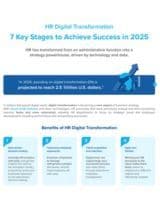
Get started with the 7 key stages of HR digital transformation. Register below to receive our infographic with details tips and insights!
Download infographic
Enter your details below to get instant access to exclusive resources.

Need a smarter way to manage HR and payroll?
Let’s discuss how Zalaris can simplify operations, ensure compliance, and support strategic growth.