
Having a strong employee experience strategy can improve employee engagement and retention. It can also boost productivity and deliver tangible benefits, including higher profitability. In this blog, we’ll examine key strategies for enhancing employee experience, the role of technology in transforming the workplace, and how organisations can measure and optimise their approach to create a thriving workforce.
What is employee experience?
Employee experience refers to the cumulative sum of an employee’s interactions, perceptions, and emotional responses throughout their employment journey within an organisation. This covers everything from pre-recruitment to recruitment and post-exit engagements. Employee experience is determined by aspects like workplace culture, management interactions, physical work environment, and professional growth opportunities.
To gain more insight into the true value of a positive employee experience, I shared a poll on LinkedIn asking my network which of the following factors would push them to leave their current organisation:
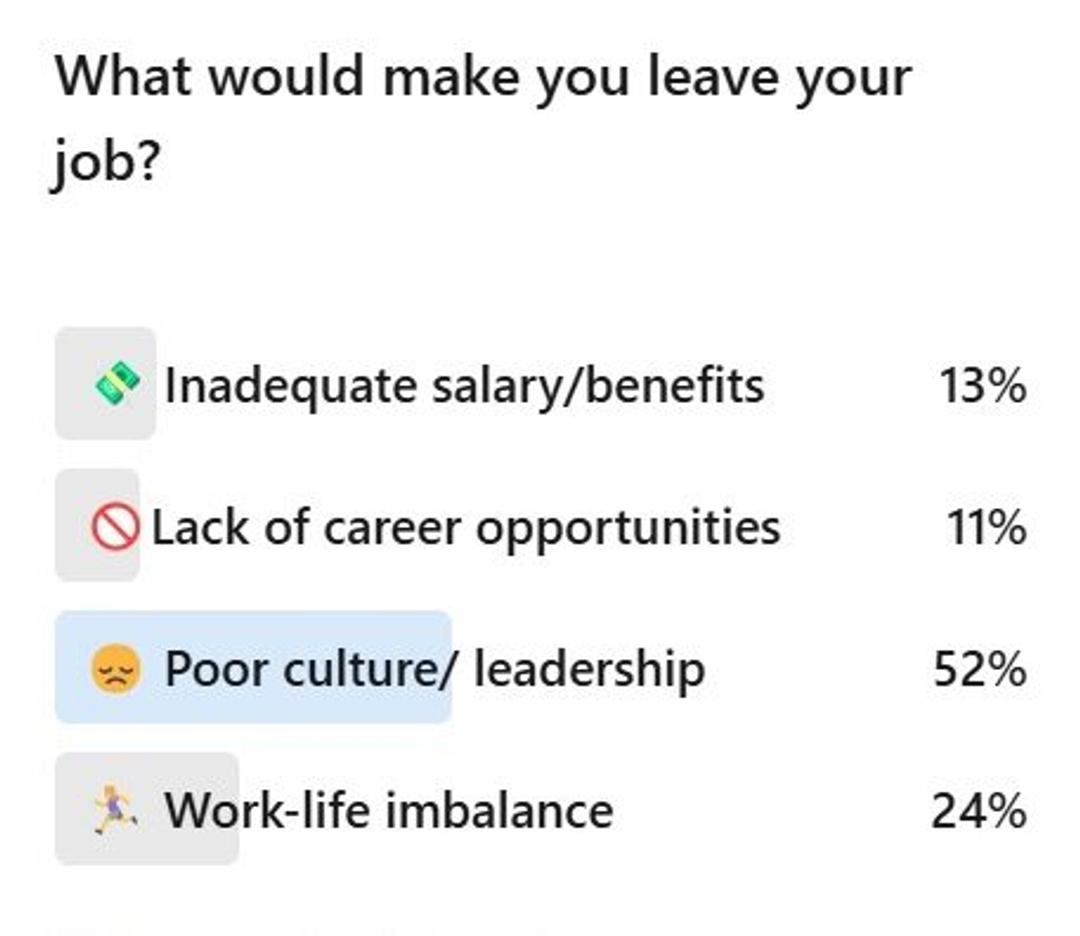
A whopping 52% of respondents chose ‘Poor culture or leadership’ as the main reason that would make them quit their job. This personal anecdote highlights how integral an effective employee experience strategy is for organisations in 2025.
Understanding the employee life cycle
According to workforce analytics research, the employee life cycle encompasses every stage of an employee's trajectory within an organisation, from the initial talent acquisition phase through to their eventual transition. Crucially, recognizing and supporting each phase of this cycle has emerged as a critical determinant for building robust employee experience frameworks that demonstrably drive engagement metrics and job satisfaction outcomes. Analysis by leading HR institutes suggests that organisations failing to address these touchpoints face retention challenges that extend far beyond immediate operational impacts.
While focusing on the entire employee life cycle, forward-thinking organisations can ensure that employees experience sustained support from their first day onward. However, a well-structured onboarding process alone cannot guarantee positive workplace culture outcomes – it must be complemented by ongoing professional development opportunities that keep employees motivated and engaged throughout their tenure. Data indicates that recognizing achievements and providing clear pathways for advancement further enhance retention rates, with some studies showing improvements of up to 40% in employee satisfaction metrics when these elements are systematically implemented.
Understanding the employee life cycle also enables organisations to pinpoint critical areas where evidence-based improvements can be implemented – whether through streamlining recruitment processes, offering more targeted development programs, or fostering measurably more inclusive workplace cultures. By addressing these strategic touchpoints, companies can create seamless and supportive experiences that not only boost quantifiable employee engagement but also lead to demonstrable business outcomes and significantly higher retention rates. The most successful organisations treat this not as an administrative framework, but as an opportunity to build trust and demonstrate operational excellence in practice.
Crafting an employee value proposition
For many HR leaders across global organisations, a compelling employee value proposition (EVP) represents far more than a compliance milestone in talent strategy. It marks a fundamental shift in how organisations articulate, justify and deliver their promise to the workforce. The EVP serves as a cornerstone mechanism that crystallises the unique constellation of benefits, rewards, and advancement opportunities that an organisation extends in exchange for an employee's expertise and dedication. According to leading workforce research, this goes beyond a catalogue of perks-it constitutes a strategic reflection of organisational culture and the substantive factors that position the company as a destination employer in an increasingly competitive talent landscape.
To secure and retain top-tier talent, organisations must architect an EVP that resonates authentically with both current workforce populations and prospective candidates across diverse markets. This encompasses spotlighting pathways for professional development, cultivating supportive work ecosystems, and fostering organisational cultures that demonstrate clear alignment with the company's mission and core values. Analysis by workforce management institutes shows that when employees comprehend and genuinely believe in the EVP framework, engagement levels increase significantly, satisfaction metrics improve measurably, and commitment to organisational success becomes more deeply embedded across all levels of the enterprise.
A robust EVP framework delivers outcomes that extend far beyond employee satisfaction indices and engagement scores-it systematically reduces turnover rates while generating superior business performance metrics. Through strategic differentiation in competitive talent markets, a meticulously crafted EVP enables organisations to construct a powerful employer brand architecture and ensures recognition as an employer of choice across industry sectors. Forward-thinking organisations recognise that EVP development requires sustained leadership engagement, data-driven governance frameworks, and ongoing assessment to ensure that workforce value delivery remains aligned with evolving employee expectations and market dynamics.
The importance of a strong employee experience strategy
A strong employment experience is critical for organisational success. It directly impacts talent retention, productivity, and financial performance. A strong employee experience strategy also contributes to improved organisational performance and the company's success by aligning employee engagement with business goals. Here are some benefits to convince organisations to improve employee experience:
- CIPD estimates the average cost to hire in the UK is £6,125. With strong strategies, organisations can attract higher-quality candidates, reducing hiring frequency and cost.
- Organisations investing in employee experience solutions improve their potential to earn more and improve customer satisfaction.
- Access to wellness resources and work-life balance reduces stress, lowering absenteeism.
- Companies recognised for strong team member experience can reduce the need for recruitment by 47%.
- Addressing employee needs and implementing targeted development initiatives can improve employee retention rates and drive better overall outcomes.
Engaged employees are more likely to exceed expectations for a project or satisfy a client or customer.
A strong employee experience strategy is imperative for business success. Organisations prioritising employee-centric practices see measurable gains in retention, innovation, and profitability. They also future-proof their workforce with robust strategies that answer changing workplace needs.

Key strategies to improve employee experience
Crafting a strong employee experience requires careful attention and organisations must prioritise creating a positive and encouraging work environment. Strategic initiatives that foster engagement, growth, and trust can improve the overall employment experience.
Prioritise transparent communication
Organisations should use multi-platform tools to nurture communication. Through these tools, businesses can create a sense of community, sharing updates, celebrating milestones, and reinforcing company values.
Communication should not be a one-way street. Strengthening employee experience requires robust real-time feedback mechanisms that capture employee sentiment. Any concerns that arise from pulse surveys should be addressed promptly and appropriately.
Invest in professional development
44% of employees feel their employers don’t provide adequate growth opportunities. By offering training programs and clearly defined career advancement paths, companies can drastically enhance employee motivation and satisfaction.
Investing in professional development isn’t only beneficial in terms of employee experience. If aligned with organisational goals, these strategies can boost retention, growth, and productivity. By maintaining a skilled workforce, organisations can reduce costs associated with recruitment and skill gaps.
Cultivate trust and recognition
A focus on improving organisational culture and leadership enhances employee loyalty and satisfaction. Training managers with emotional intelligence skills can improve employee experience, creating a workplace built on trust. Formal recognition programs validate contributions and create a broader sense of accomplishment.
Optimise workplace flexibility
In the workplace, both the physical environment and the way workflows are structured impact how employees feel about their contribution and work situations. First, it is evident that even when employees don’t prefer working from home, they tend to like having the option to do so. Hybrid and remote work models as well as flexible hours can meet diverse workplace needs. Ergonomic workspaces and digital tools can improve employee wellbeing.
Leverage technology
Finally, employee experience strategies should explore digital tools that help with centralising communication, and feedback, and improving productivity through simplified workflows. For organisations, these tools can be a cost-effective solution to enhancing productivity and cultivating a better sense of community.
Measuring and optimising employee experience
Organisations that combine employee experience strategies with robust measurement frameworks to track progress see greater impact.
Measure and optimise strategies by:
Tracking quantitative KPIs:
- Retention metrics, including turnover rates, especially voluntary exits, reflect the quality of employee experience.
- Productivity indicators such as sales growth, customer complaint trends, and project completion rates.
- Development engagement, such as the percentage of employees with formal training plans.
Conducting targeted surveys:
- Pulse surveys that frequently gauge real-time sentiment.
- Employee Net Promoter Score (eNPS) that measures the likelihood of employees recommending the company.
- Exit interviews to identify systemic issues causing turnover.
Analysing qualitative feedback:
- Use focus groups to explore the experiences of specific employee cohorts, like remote workers.
- Map the entire employee lifecycle to identify pain points in recruitment, onboarding and daily workflows.
Optimising through data-driven adjustments:
- Address feedback trends with targeted initiatives like tool upgrades.
- Benchmark employee experience metrics against industry standards to prioritise improvements.
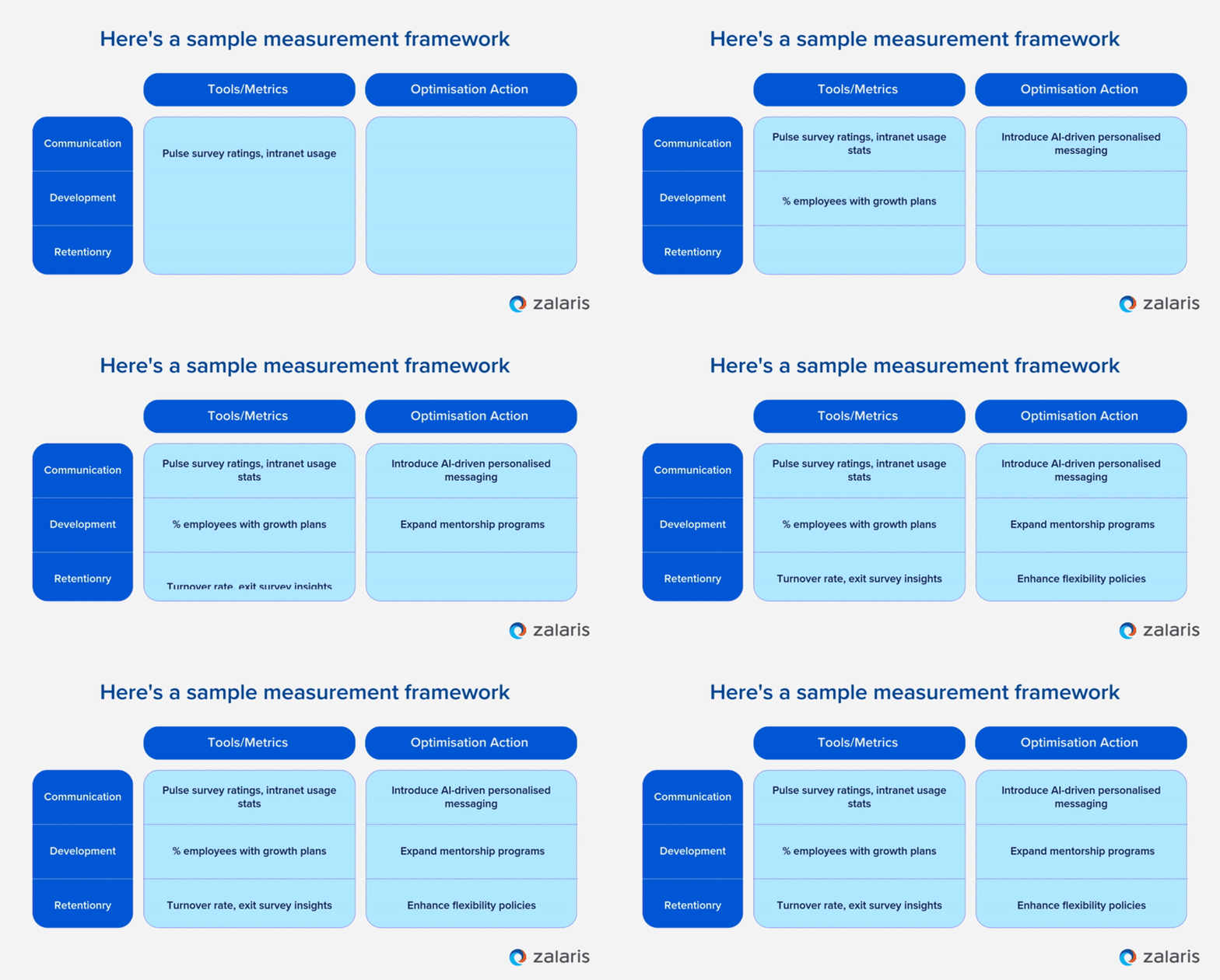
Here's a sample measurement framework:
Future of employee experience
By 2030, the landscape of employee experience will undergo one of the most significant transformations in modern workplace history, ushering in a new era shaped by accelerated technological adoption, fundamentally shifted employee expectations, and evolving business imperatives. For many organisational leaders, this represents not merely an operational adjustment but a turning point in how companies design, deliver, and sustain meaningful work experiences. Crucially, as the workforce becomes increasingly diverse and employees demand greater flexibility and personalisation, organisations face the burden of proof to demonstrate their commitment to meeting these changing needs through concrete action rather than aspiration alone.
While digital transformation remains a priority, the reach of effective employee experience strategy extends far beyond technology implementation alone. Organisations must invest in digital technologies that genuinely support remote and hybrid work models, however, this technological foundation must be complemented by continuous learning and professional development opportunities that align with individual career aspirations. Meanwhile, nurturing a positive and inclusive company culture becomes not just beneficial but essential for supporting employee well-being and engagement. According to leading workforce research institutes, organisations that prioritise these interconnected elements will be better positioned to attract, develop, and retain top talent in an increasingly competitive market where traditional retention strategies no longer suffice.
The most successful organisations will be those who treat talent management -encompassing talent acquisition, development, and retention-as a strategic imperative that plays a pivotal role in shaping sustainable employee experience outcomes. By aligning talent management processes with evolving employee expectations and business goals through objective, measurable criteria, organisations can enhance retention rates, drive measurable business success, and build a resilient workforce prepared for future challenges. Forward-thinking leaders recognise that prioritizing employee experience today is not just the key to building a thriving organisation, but the foundation for creating a future-ready enterprise capable of adapting to whatever workforce evolution lies ahead.
Driving business success through enhanced employee experience
Organisations with a strong employee experience strategy reap measurable benefits. Research shows that satisfied employees invest up to 40% higher discretionary efforts into their work. Evidence also suggests that these strategies improve retention in competitive labour markets, particularly when addressing flexibility and purpose.
By designing employee experience solutions that address employee concerns holistically, companies can cultivate environments where employees thrive and drive organisational success.
Embracing the importance of creating an excellent employee experience is key to success. Organisations need to prioritise communication, career development opportunities and employee wellbeing to create a workforce that feels valued, engaged and motivated.
The good news is that organisations don’t have to do it all by themselves. They can leverage technology by investing in expert HR solutions to drive data-driven strategies and cultivate a culture of productivity. Partnering with us gives you access to extensive expertise and ready to deploy HR solutions to optimise your employee experience strategy. From simplified payroll frameworks to talent management hubs, our solutions can help organisations create workplaces where employees don't just work, but thrive. Learn more by connecting with our team.