

 Back to Resource Library
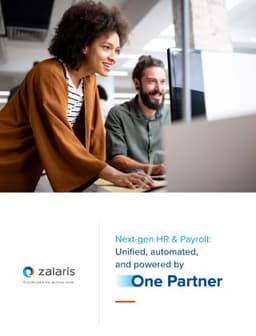
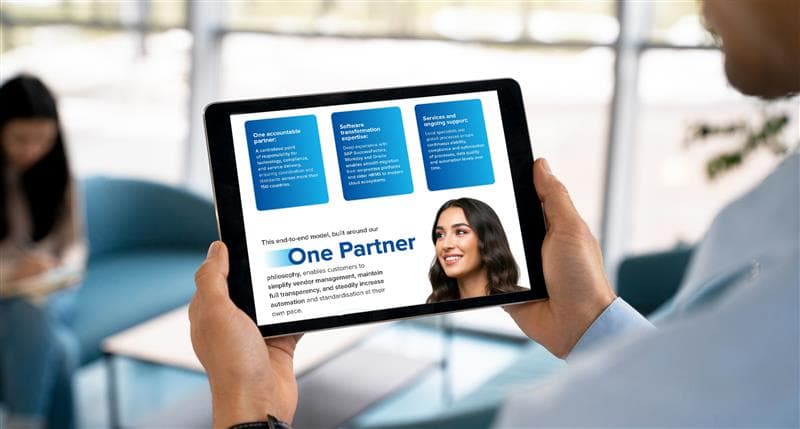
Next‑gen HR & Payroll: Unified, automated, and powered by One Partner
Most HR and payroll problems are not technology problems. They are data problems. Fragmented systems, manual reconciliations and disconnected processes create the errors, delays and compliance risks that teams spend their time working around. This whitepaper sets out how modern enterprises are rethinking their HR and payroll architecture, and what it takes to move from reactive administration to unified, automated operations.
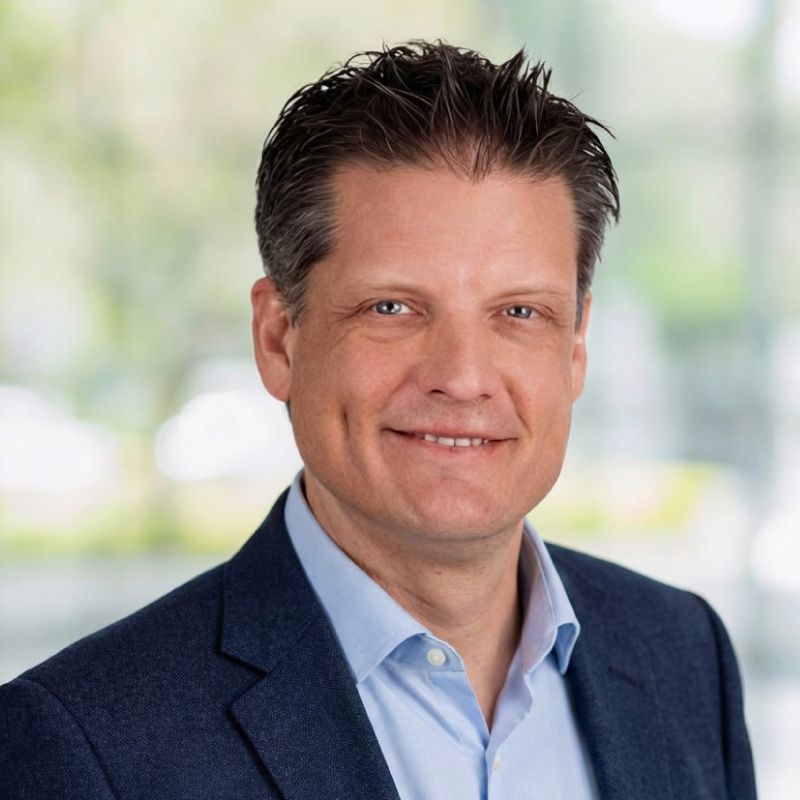
Bastiaan Karlas
30.03.2026·2 min read


The problem with how most organisations run HR and payroll today
For years, the answer to HR and payroll complexity was more software. Organisations added point solutions for time, benefits and talent on top of their core HR platforms, then connected them with bespoke integrations. The result was not simplification. It was a patchwork of systems, each holding its own version of employee data, and none of them talking to each other cleanly.
The cost shows up in familiar ways: payroll errors traced to stale upstream data, reporting cycles that take days because teams are reconciling figures from multiple tools, and compliance risk that compounds with every new country-specific workaround. These are not edge cases. They are standard operating conditions for most global enterprises today.
Why adding more technology is not the answer
Legacy HR suites and early cloud HCM platforms were built to capture and store data, not to enable automation or drive insight. The challenge is not that these systems are old. It is that they were never designed to provide the consistent, trustworthy data foundation that modern payroll, reporting, and AI-assisted decision-making depend on. Replacing one system with another does not solve the underlying problem if the same architectural decisions are repeated. What changes the outcome is how the data layer is built and governed.
What you will find inside
This whitepaper draws on Zalaris' experience supporting global enterprises across more than 150 countries and includes real-world outcomes from Metsä Group and Eurowings.
| Why legacy HR systems fail | The structural limitations of traditional SaaS HR suites and why adding more software rarely solves them. |
|---|---|
| The data layer argument | Why consistent, well-governed employee data is the prerequisite for reliable automation, not an outcome of it. |
| The modular operating model | How separating the data foundation from the automation and experience layer changes what is possible. |
| Strategic decision framework | Four considerations for senior leaders evaluating HR and payroll transformation. |
| One Partner case studies | How Metsä Group and Eurowings consolidated fragmented systems into unified, automated operations. |
Fill out the form and we will send you a download link at once.
Bastiaan Karlas
Executive Vice President BeNeLux
Bastiaan is a senior HR & Payroll transformation leader with more than 20 years of international experience in HCM technology, global payroll and large-scale outsourcing. As Executive Vice President at Zalaris, he drives Next-gen HR and payroll strategies that enable organisations to standardise globally while ensuring strong local compliance.
He has led complex, multi-country HR and payroll transformations for global organizations, overseeing international project and programm teams across Europe, Asia and North America. His expertise spans cloud HCM adoption, global template design, process harmonisation and the integration of HR, payroll and finance systems.
With prior senior leadership roles at PwC, Deloitte and NGA HR, Bastiaan brings a combination of strategic advisory expertise and hands-on execution, helping multinational organisations build scalable, future-ready HR and payroll operating models.
Get the whitepaper
Fill in your details below and we will send you immediate access to the full whitepaper.