
 Back to Blogs
Swedish payroll complexity and SAP architecture
For HR and finance leaders in Sweden, payroll day should be a controlled, predictable process. Too often, it is not. Despite mature technology being available, many organisations still experience manual corrections, last-minute exceptions, and limited visibility before every cut-off. The root cause is rarely the payroll software itself. It is how that software is structured.
22.05.2026 · 6 min read


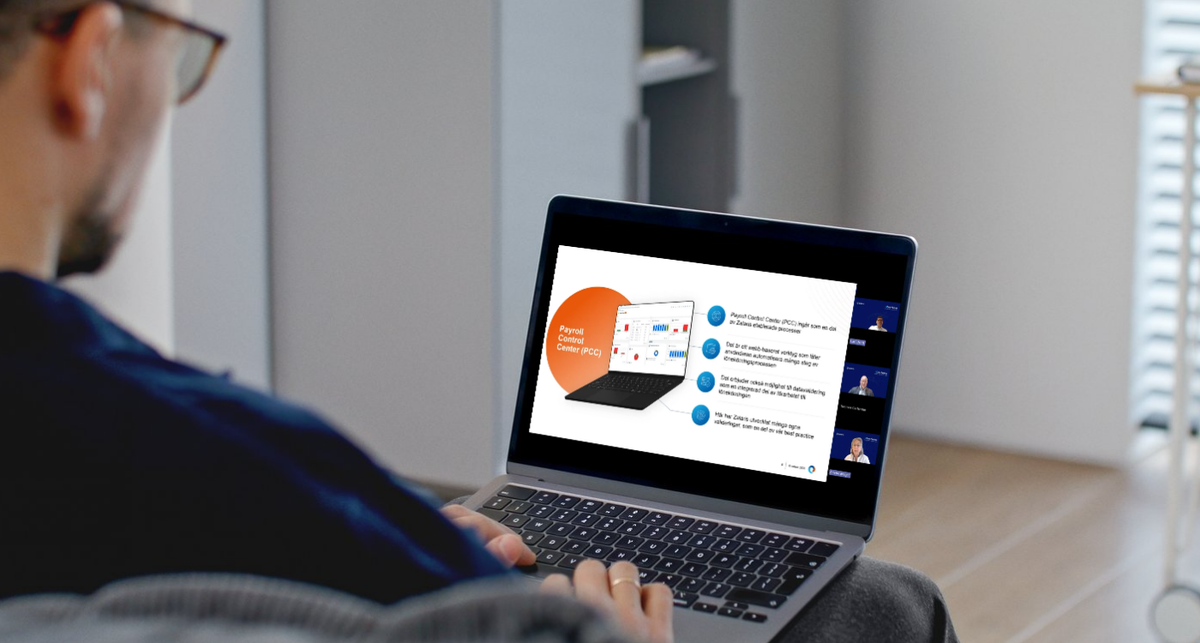
In a recent webinar, Zalaris solution architects Anette Meijer and Carl Drott, joined by Thomas Carlström, walked through precisely why Swedish payroll complexity persists and what a well-designed SAP architecture actually looks like in practice. This blog draws out the key insights for HR directors, CHROs, and payroll managers navigating the same challenges.
The Swedish payroll challenge is structural, not technical
Sweden has one of the more demanding payroll environments in Europe. Collective agreements vary significantly across sectors, retroactivity rules are intricate, and the requirements around vacation entitlement calculation and legal updates are unforgiving. Organisations that have grown internationally carry the added pressure of aligning Swedish specificity with multi-country consistency.
What is often misunderstood is where the real risk lives. Most payroll problems in Swedish organisations are not caused by software failure. SAP Payroll, for instance, is a powerful and well-established engine. The risk comes from how it has been set up: the architectural decisions made during implementation and the accumulated workarounds layered on top over time.
When payroll relies on manual processes outside the system, on knowledge held by one or two individuals, or on heavily customised country configurations that have drifted from any standard, the organisation becomes fragile. A person leaving. A legislative change. An acquisition. Any of these can expose structural weaknesses that, until then, were simply tolerated.
What poor payroll architecture looks like
The Zalaris solution architects described a set of recurring patterns they encounter when organisations come to them with payroll pain. These patterns will be familiar to many HR and payroll teams.
Over-customised solutions are common. Organisations build local fixes for specific requirements rather than working within a governed template structure, and over time those fixes multiply. Manual work accumulates outside SAP, in spreadsheets, in inboxes, in individual tribal knowledge, because the system was never configured to handle validation and exception management properly. In multi-country environments, each country's payroll can end up as a separate island, with no harmonised logic and no shared governance.
The business consequences are direct: stress before every payroll cut-off, limited visibility for HR leadership, difficulty expanding into new markets, and rising operational costs. These are not abstract risks. They are the everyday experience of payroll teams working in poorly architected environments.
A template-based architecture as the foundation for control
The alternative is not more customisation. It is less of it. A template-based architecture sets a standard structure that applies across countries and business units, with local requirements handled within that structure rather than bolted on outside it. This is the approach Zalaris advocates, and it is what enables scalability when organisations grow across borders.
Within a well-structured SAP payroll environment, automation can take on tasks that are currently handled manually. Vacation entitlement calculations, controlled retroactivity, integration with time and finance systems, and the testing and implementation of legal updates are all areas where the system should be doing the heavy lifting. When core logic is embedded in the system rather than managed outside it, payroll teams move from reactive troubleshooting to proactive control. This is a meaningful shift, both in terms of risk and in terms of what payroll professionals can focus their time on.
Payroll Control Center: catching problems before they become payroll day surprises Payroll Control Centre (PCC)
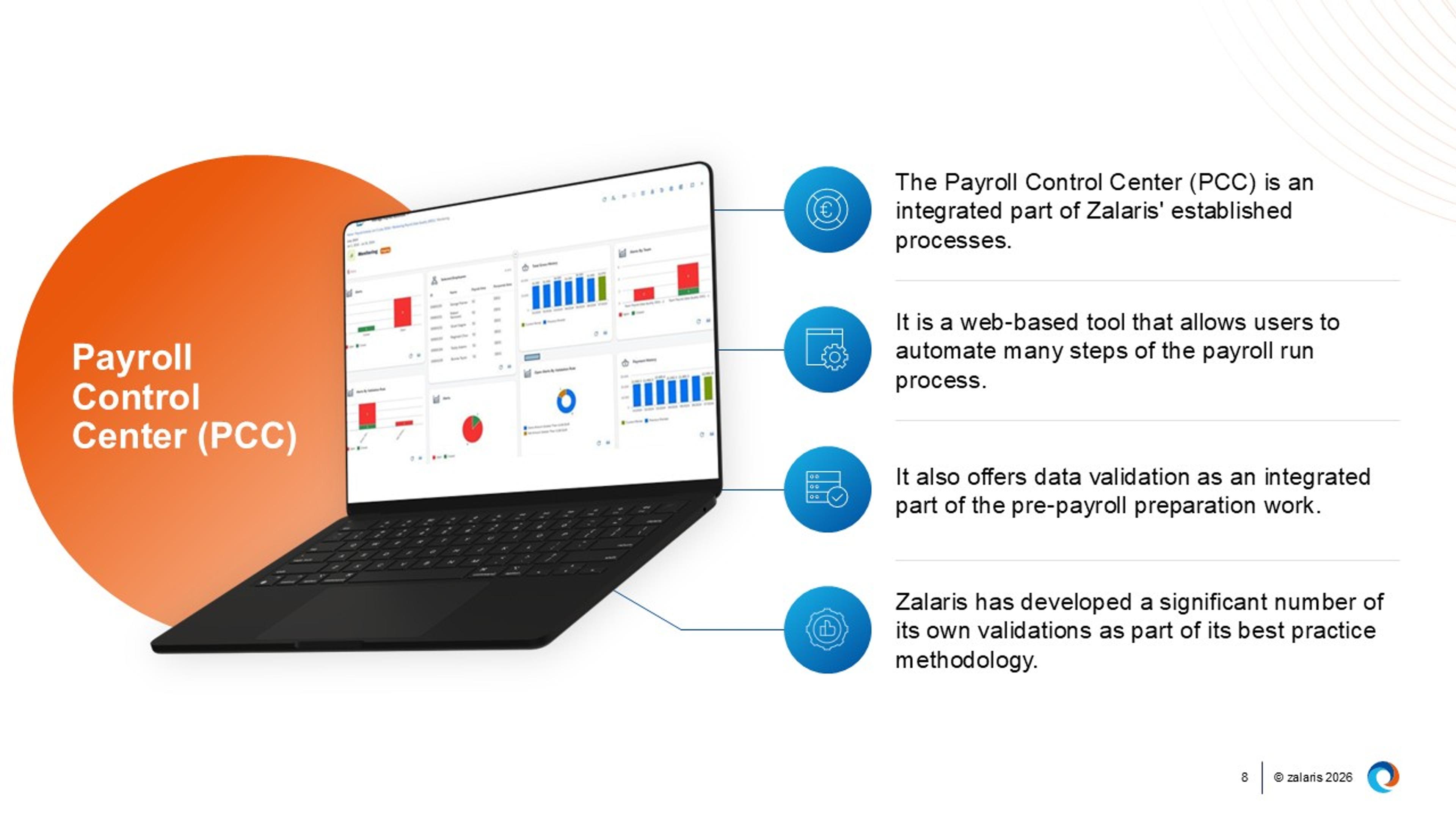
One of the more concrete tools discussed in the webinar is SAP's Payroll Control Center. The principle is straightforward: validation should happen inside the system, not in a spreadsheet review the morning before payroll runs.

With country-specific validation policies configured for the Swedish context and extended to other countries in a multi-country setup, the Payroll Control Center enables anomalies to be caught early, resolution processes to be structured and traceable, and accountability to be transparent. For a CHRO or HR director, this means there are no last-minute surprises. The numbers have been validated through a governed process before anyone approves the run. That predictability has value not just on payroll day, but in how the HR function is perceived by the wider business.
Delivery model is secondary to architecture
A point that came through clearly in the webinar is that the choice of delivery model (whether an organisation opts for hosting, managed payroll, application maintenance, or full BPO) matters less than people often assume. What matters first is that the underlying architecture is sound. A poorly structured payroll environment will create problems regardless of who manages it.
Zalaris supports all of these models, and the flexibility is genuine. But the starting point in any engagement is the architecture. Governance and structure are what determine whether payroll feels controlled or risky, not who presses the button at cut-off.
The case for local expertise with global capability
Swedish payroll is genuinely complex, and that complexity deserves respect rather than generic solutions. The Zalaris team in Sweden combines in-house SAP payroll consultants with deep knowledge of Swedish market requirements, including collective agreements, regulatory specifics, and the nuances of local employment law. That local grounding matters.
What it enables, however, is not just good Swedish payroll. It is a strong local foundation from which organisations can scale internationally. When the Swedish setup is well-architected and governed, it becomes a model rather than an exception, something that can inform how payroll is structured in the next country, and the one after that.
What better payroll architecture delivers in practice
The concrete outcomes of moving to a well-structured SAP payroll environment include reduced operational stress for payroll teams, greater transparency for HR and finance leadership, stronger compliance with both Swedish and international requirements, and the ability to scale into new markets without rebuilding from scratch each time. Payroll cycles become predictable. Audit trails are clean. The function becomes a source of confidence rather than anxiety.
For organisations that have been managing payroll complexity through manual effort and individual expertise, the change is significant. But it begins with an honest assessment of current architecture, and a willingness to address the structural issues rather than work around them indefinitely. Talk to our team about your payroll architecture here.


Table of Contents
- The Swedish payroll challenge is structural, not technical
- What poor payroll architecture looks like
- A template-based architecture as the foundation for control
- Payroll Control Center: catching problems before they become payroll day surprises Payroll Control Centre (PCC)
- Delivery model is secondary to architecture
- What better payroll architecture delivers in practice