



Cross-border payroll now covers hybrid work, short-term assignments, expatriate programmes, mergers and regional growth.
Each scenario creates tax obligations that depend on accurate employee data and local reporting rules. Integrated HR and payroll platforms bring that information together, and many businesses also rely on connected HR, payroll, finance, and erp systems. They help organisations move away from country-by-country administration and towards a more consistent model for payroll calculations, tax treatment, reporting deadlines and audit evidence, with stronger global coverage across multiple jurisdictions. This kind of seamless integration improves the flow of tax data into financial reporting.
Key takeaways
- Global tax compliance software structures cross-border tax reporting.
- Integrated platforms reduce handoffs between HR, payroll, tax, finance, and mobility.
- International tax compliance solutions usually fall into three models: build, bolt on or buy integrated.
- Strong tax compliance software supports automation, updates, audit trails and access controls.
- Zalaris simplifies multi-country HR and payroll through cloud solutions, managed services and SAP expertise.
Cross-border tax compliance: the challenges HR teams face
Managing global tax compliance creates daily operational pressure because changing tax law, employee data, payroll deadlines, and reporting formats across different countries put added strain on HR, payroll, and finance teams. Without accurate, real-time information, HR and payroll teams face inconsistencies, errors, and even fines, while automated tax compliance software helps reduce manual errors, lower compliance risks, and support ensuring compliance.
Workforce mobility creates tax complexity
Cross-border tax compliance becomes more difficult when employee locations, payroll data, and local reporting rules move at different speeds. HR and payroll teams need a reliable way to capture where people work, how they are paid, and which tax obligations apply across multiple jurisdictions, since employee movement can also trigger indirect tax obligations in some business travel or cross-border service scenarios.
Common scenarios include employees working across multiple tax jurisdictions, remote workers based in another country, and expatriates receiving allowances or benefits. Each case can affect income tax, social security, employer obligations, withholding and year-end reporting.
Fragmented data slows decisions
The challenge grows when data sits across several systems. HR holds the employment record. Payroll owns the calculation. Finance requires cost allocation. Mobility manages the assignment policy. Tax teams interpret local obligations. IT supports the integrations. ERP systems are often another source of record, depending on the business model and transaction volume.
Without a joined-up model, teams spend valuable time reconciling data rather than making compliance decisions. Direct links help tax data move cleanly between functions, and a platform supports stronger tax management when direct ERP integrations automate tax calculation within billing workflows.
APIs also enable custom workflows where operating setups are unique. Salesforce research found that 81% of IT leaders say data silos are hindering their organisation's progress, with employees losing an average of 12 hours every week searching for information across disconnected systems. A significant productivity cost that compounds at every stage of the compliance process.

Reduce data silos and manual handoffs by keeping HR, payroll, finance and tax data aligned
Digital tax administration raises expectations
The OECD reports that around three-quarters of tax administrations now have a comprehensive data management strategy. That shift matters because tax authorities increasingly expect structured, timely, and reliable data, so software should use regulatory updates to monitor international tax policy changes automatically and maintain current compliance requirements across multiple countries. Global tax compliance software helps organisations keep pace by turning payroll data into controlled reporting outputs.
Better data control helps organisations reduce incorrect withholding, employee tax exposure, social security misalignment, audit challenges and avoidable operating costs, while strengthening employee experience and workforce mobility and supporting broader global compliance expectations, including digital reporting and e-invoicing requirements.
International tax compliance solutions: build, bolt on, or buy integrated?
International tax compliance solutions usually fall into three models: building internal capability, adding specialist tools around existing platforms, or buying an integrated HR and payroll platform. The right model depends on complexity, country footprint, internal resources, and the organisation’s appetite for ongoing maintenance.
| Option | Pros | Cons | Best Fit |
|---|---|---|---|
| Build internally | High control, tailored logic, direct ownership | Heavy maintenance, reliance on internal expertise, slower expansion into new countries | Large organisations with mature tax, payroll, and IT teams |
| Bolt on specialist tools | Quick support for specific tax or reporting needs, useful for targeted gaps | More integrations, extra vendor management, possible data duplication | Organisations with stable core payroll and a defined compliance gap |
| Buy integrated | One platform model, stronger data flow, consistent reporting, managed updates, clearer governance | Requires process alignment and stakeholder commitment | Multi-country organisations seeking scalable payroll and tax control |
Integrated global tax compliance software often offers the strongest fit for long-term simplification. The right model should also support global coverage, cross border compliance, and regulatory filings as organisations expand. Some organisations also need indirect tax support, including vat and gst, gst compliance, services tax, and us sales tax, depending on country footprint. Ultimately, the buying decision is a payroll operating model decision for HR leaders. The goal is to find a model that keeps HR, payroll, finance, tax, and IT aligned as the organisation grows.
Choosing the right tax compliance software: buying checklist
Choosing tax compliance software means testing operational fit: country coverage, automation, governance, vendor capability and implementation support, and whether it covers the entire tax lifecycle, from tax determination and tax calculation to tax filings and tax returns. Global tax compliance software needs to support today’s jurisdictions and provide a credible route for expansion, which also depends on handling filing requirements and giving teams visibility into compliance status across multiple countries.
Checklist of vendor questions:
- Which countries and tax jurisdictions does the platform support as standard, and does it also support sales tax and track nexus thresholds through nexus monitoring for growing businesses?
- How often does the provider update local tax, social security and reporting rules, including real-time tax rates to support accurate returns?
- How does the platform manage expatriates, short-term assignments and remote workers?
- Can the system connect HR master data, payroll results, benefits, time, absence, and finance data?
- What controls exist for approvals, role-based access, segregation of duties and audit evidence?
- Which reporting dashboards help leaders monitor compliance status, filing requirements, and stay ahead of deadlines alongside payroll accuracy and unresolved exceptions?
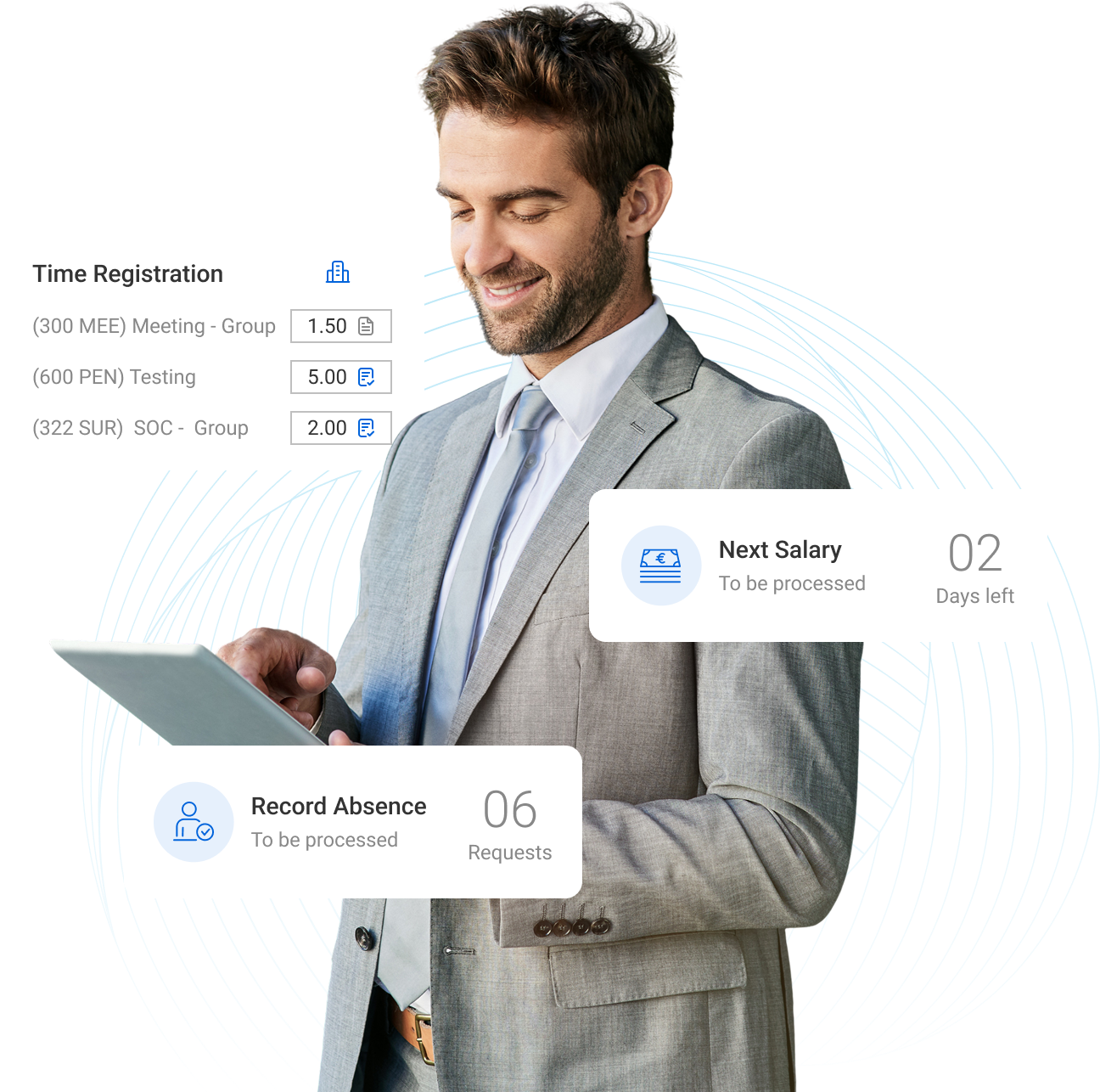
See how PeopleHub centralises employee data, payroll and country-specific compliance.
When selecting a vendor, the following are considered red flags:
- The vendor relies on manual workarounds for common cross-border scenarios, tax filings, or exemption certificate management.
- Local tax updates depend mainly on customer configuration rather than provider-managed maintenance.
- Reporting outputs look strong in one country but lack depth across the wider international footprint, which can raise non-compliance risk across multiple jurisdictions.
Strong international tax software needs clear ownership. HR, payroll, tax, finance, and IT all need defined roles in the process. The software enables control, but the operating model turns that control into consistent results.
Managing cross-border tax compliance in practice
Managing cross-border tax compliance depends on integration. Employee movement, work location, payroll calculations, reporting, and audit evidence must all be linked before payroll closes. Integrated workflows also support real time tax calculations, helping reduce over-collection or under-collection when employee pay or allowances change.
An example scenario
A UK-based specialist starts a six-month assignment in Germany, keeps UK benefits, receives a housing allowance and spends several working days each month in Poland. An integrated platform captures the assignment in HR, applies the correct payroll treatment, supports tax determination across different countries, flags the relevant compliance requirements before payroll closes and routes the case for review. Zalaris supports this kind of operating model by combining HR and payroll technology, managed service expertise and multi-country payroll knowledge.
Payroll can view the allowance, taxability, social security position, home and host country treatment, and reporting requirements. Finance receives the right cost allocation. HR keeps the employee record complete. Tax teams receive evidence for review.
The same model supports shadow payroll, gross-ups, hypothetical tax, certificates of coverage, assignment allowances and local reporting. Automated reporting then turns payroll data into structured outputs for local authorities, internal reviews and audit evidence.
Check automated reporting outputs
Automated reporting is only useful if it's built around payroll data, not bolted on top of it. When it works well, it should deliver:
- Pre-payroll exception checks catch exceptions before closure.
- Local tax and social security reporting matches statutory outputs with local requirements, with e-invoicing supporting secure transmission to tax authorities through digital tax networks.
- Audit trails for calculations, approvals, and submissions store historical data and transaction records to support transparency, audit readiness, and audit support.
- Dashboards for actions, late inputs and deadlines prioritise workflows to the most impactful tasks.
- Secure access for HR, payroll, finance, tax, and IT limits the spread of personal data.
- Consistent reporting logic across countries guarantees better macroview for leaders.
- Evidence packs for internal and external audits, limiting review times and helping tax professionals and tax experts review regulatory filings more efficiently.
Cross-border tax reporting tools work best when they sit close to payroll data. Payroll is where employee pay, deductions, benefits and statutory obligations become real.
Taking the complexity out of global tax compliance
Global tax compliance software provides organisations with a practical way to strengthen control over cross-border payroll, reporting, and employee tax obligations by centralising tax management and helping small businesses as well as larger organisations reduce manual errors. As tax authorities digitalise, HR and payroll platforms need to connect data, automate reporting and support local requirements without adding operational complexity, which is especially valuable for businesses operating in multiple countries, where automated processes support accurate returns and lower compliance risks.
Zalaris helps organisations simplify HR and payroll through cloud-based solutions, outsourcing, and long-standing SAP expertise. For multi-country employers, we bring together platform capabilities, payroll process knowledge, and managed service support, helping HR and IT leaders create a more consistent model for international tax compliance and broader global compliance needs as organisations grow.
Book a call with Zalaris to review current payroll and tax compliance complexity before the next reporting cycle adds more pressure.
FAQ