

AI adoption in payroll is already under way, but adoption does not automatically equal value. McKinsey’s 2025 State of AI report found that 88% of respondents say their organisations regularly use AI in at least one business function, compared to 78% last year. However, most AI adoption remains in the experimentation or piloting stage, and only one-third of organisations have begun to scale AI programmes.
The implication for payroll is clear: AI will create the most value where the underlying operation is already connected, consistent and accountable. Before organisations can scale more advanced capabilities, they need to simplify the processes and integrate the data those capabilities depend on.
The key trends shaping AI adoption in payroll demonstrate how leading organisations are moving away from using standalone AI tools to augment individual processes, and towards building AI-enabled capabilities into the workflows that support every payroll cycle.
1. Unifying payroll will be crucial to support AI adoption
AI is only as useful as the work, data and decisions around it. In payroll, fragmented processes can limit the value of even the most capable technology. PayrollOrg’s 2025 Getting the World Paid survey highlights the landscape AI is entering: 86% of respondents use a global HRIS as their system of record for employee data, yet only 52% process payroll through a single global payroll system.
That gap creates the conditions for manual handoffs, inconsistent rules, repeated reconciliations and data-quality issues. Disconnected systems make it harder to automate safely and harder to understand what needs attention. Integration, standardisation and clearer visibility will therefore become just as important as automation itself.
The efficiency of AI capabilities will be determined by how well they connect data and workflows across complex, multi-country payroll environments, rather than by what they can do in isolation. Organisations will first need consistent data structures, clearer process ownership and a reliable way to connect HR, time, payroll and finance information in order to leverage AI.
2. Routine work will be automated, exceptions prioritised
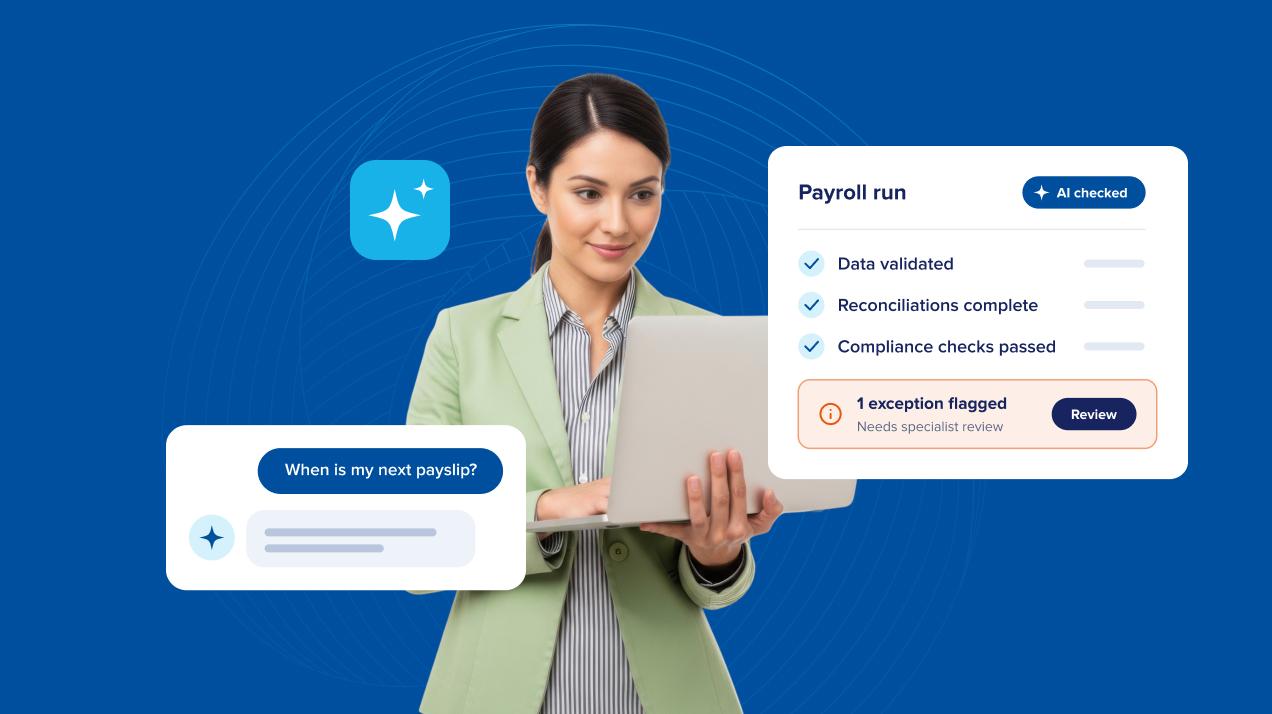
Payroll teams still spend significant time on work that technology can increasingly support. Data collection, validation, checking, reconciliations, exception management and repeated responses to employee queries all add to the burden every pay cycle. AI and automation can reduce that burden by handling routine tasks consistently and directing attention towards the cases that require context or judgement.
AI can help identify anomalies, prioritise exceptions and give payroll professionals the information they need to investigate issues faster. Intelligent workflows can move data through approvals and validation steps, while payroll specialists retain control over decisions that affect pay, compliance or employee outcomes.
3. Compliance will become on-going, not periodic
Global payroll compliance is becoming a more immediate operational risk, not a periodic administrative check. In PayrollOrg’s 2025 Getting the World Paid survey, ensuring compliance at the local level was identified as the leading challenge facing global payroll teams.
As organisations operate across more countries and regulations continue to change, manual compliance reviews become harder to sustain. Depending on the system and data available, AI can help surface legislative changes relevant to a particular country, check payroll inputs and results against rules such as tax thresholds, minimum-wage rates or statutory deductions, flag unusual outcomes for review, and bring together the records showing what was checked, when and by whom.
The role of payroll professionals remains essential. They must interpret local requirements, assess exceptions, validate system outputs and decide when action is required. While we are not at a point where compliance can be ensured without human involvement, AI supports continuous monitoring, clearer audit trails and data-driven decision-making.
5. Employees will expect instant answers and seamless experiences
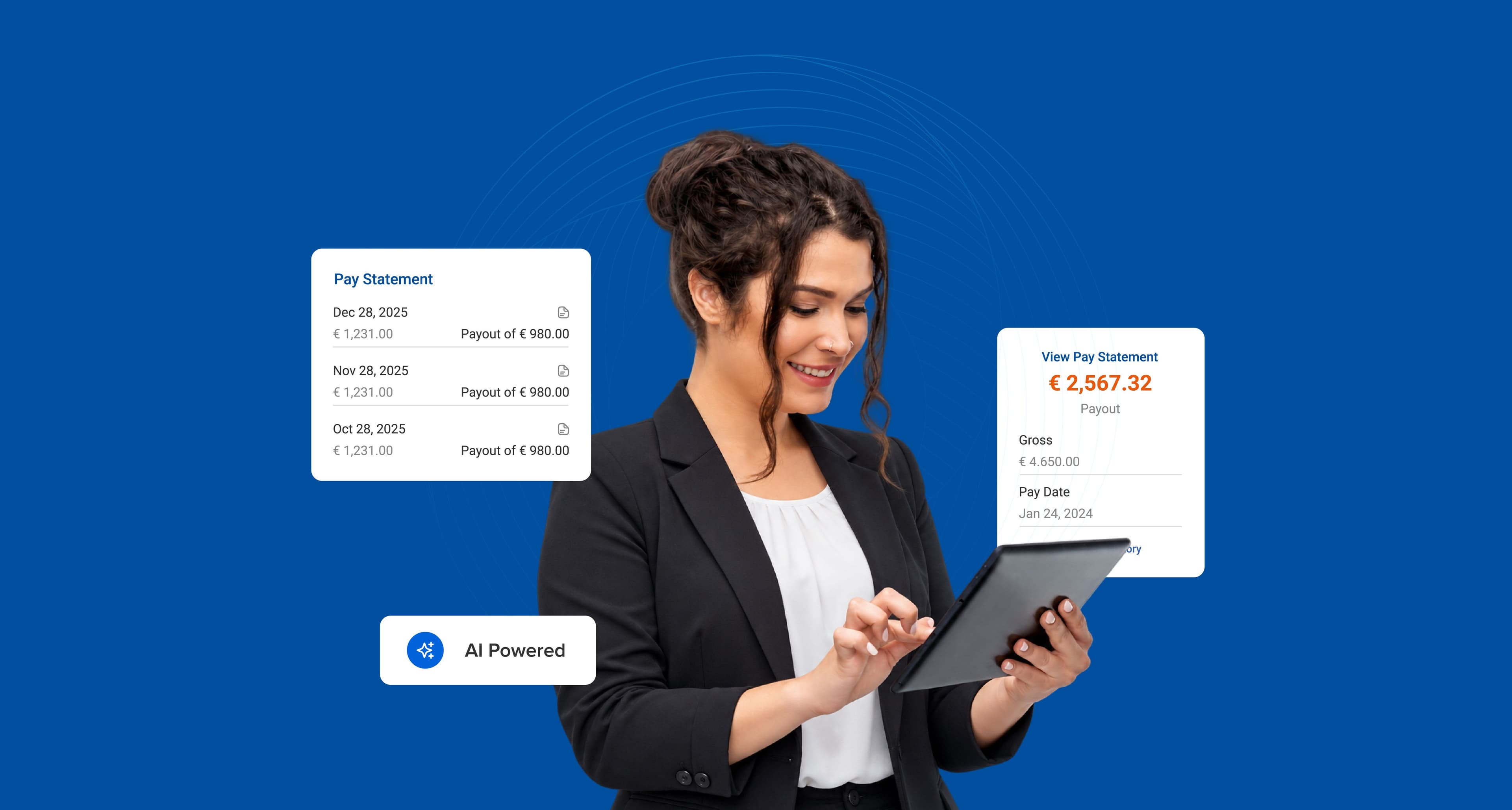
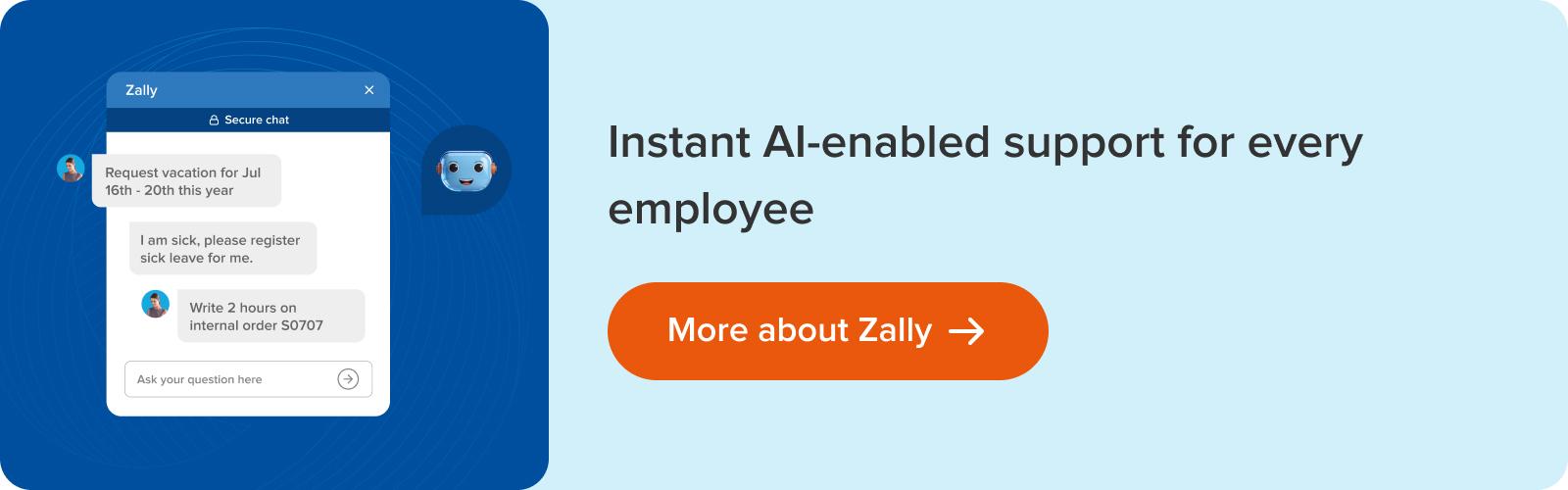
Employees increasingly expect to access payslips, tax documents and answers to payroll questions quickly and through the channels they already use. AI assistants and self-service tools can help employees find information, understand their pay and complete routine requests without creating additional work for payroll teams.
Enabling employees to access instant answers to common queries also helps reduce the burden on payroll teams. Employee enquiries are a substantial source of workload for payroll teams. The 2024 iPASS Voice of Payroll report found that 62% of payroll processors considered handling enquiries one of their most time-consuming tasks. AI assistants capable of answering routine queries considerably lighten that load.
However, the value depends on the quality of the underlying information. Personalised experiences are only useful when payroll data is accurate, current, accessible and presented in a way that employees can trust. This makes data quality, process design and integration just as important as the interface employees see.
4. Move from native AI features to connected payroll intelligence
Activating the AI already available within an HCM or payroll platform is a logical starting point. Native capabilities can support individual tasks such as employee assistance, data validation, anomaly detection and reporting. But they should not define the limits of an organisation’s AI strategy.
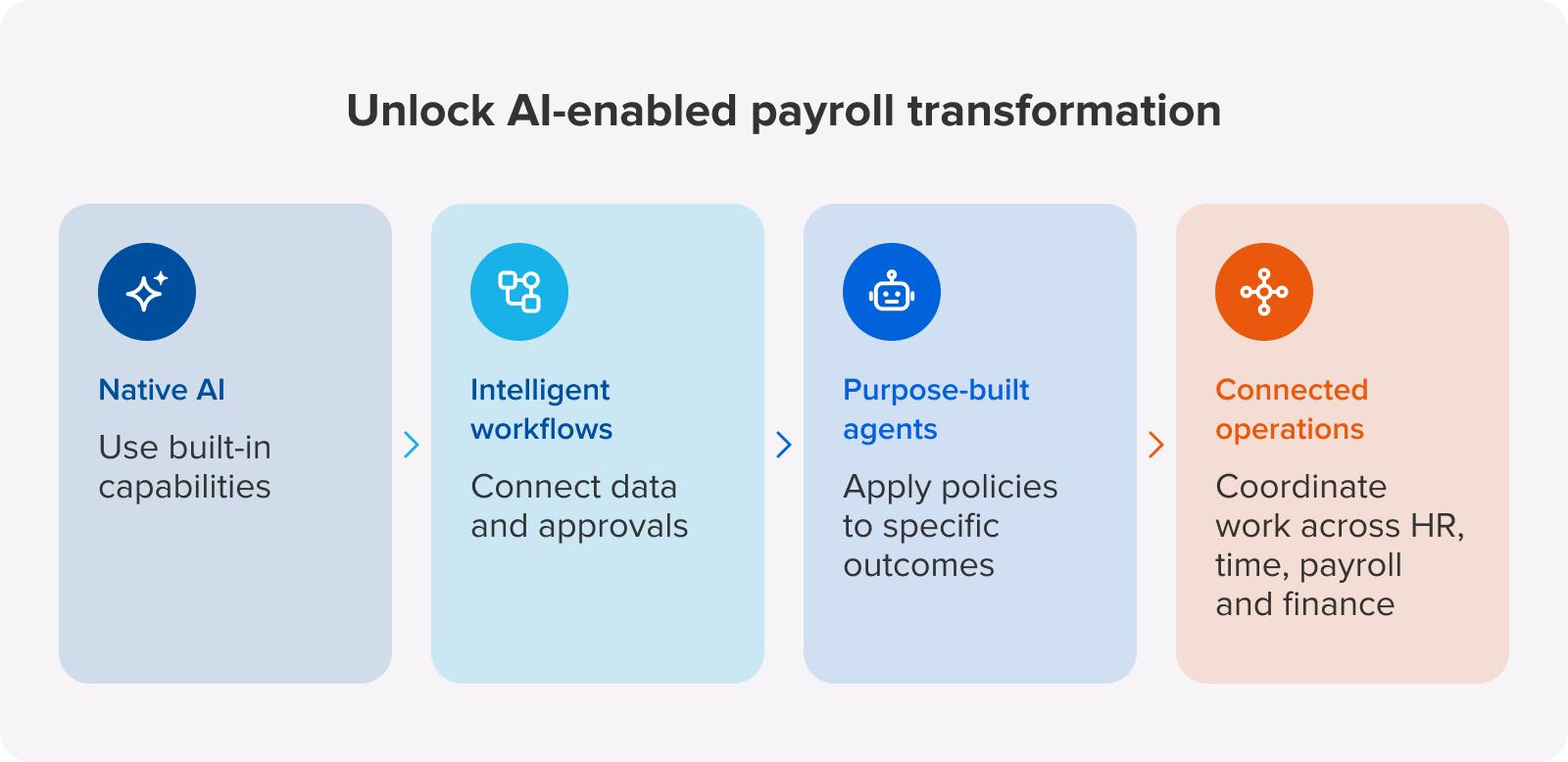
Organisations can progressively extend standard capabilities using their own data, policies and processes. Custom agents can then be introduced around specific business outcomes, while agent-to-agent orchestration creates the potential to coordinate work across Core HR, payroll and the wider technology ecosystem.
This progression from native AI to workflows, agents and agent-to-agent processes is important when making payroll transformation decisions today. Technology, data and integration choices should create the flexibility to take advantage of new capabilities as they develop, rather than locking the organisation into highly manual or fragmented processes.
7. The right operating model is key for AI-enabled payroll
AI also changes the payroll operating-model decision. Organisations running payroll in-house can build on native AI, automation and agents within their own technology environment, supported by the right Application Management Services (AMS) and specialist capability.
But organisations do not necessarily need to build every capability themselves. In Hybrid and Managed Payroll models, a specialist provider can invest in AI, automation and intelligent workflows as part of service delivery. This can give customers access to more efficient processing, validation and exception management without requiring them to develop and continuously maintain every capability internally.
Over time, agent-to-agent processes can connect these environments further, allowing intelligent workflows to operate across customer systems, provider capabilities and different technology platforms.
The transformation question therefore becomes broader: what should your people do, what should technology do, and which capabilities are best built internally or accessed through a specialist partner?
One partner to help you run payroll on your terms
Zalaris believes in leveraging AI in every stage of payroll transformation – from AI-powered implementation programmes, to the AI features your employees will use. Whether you are running payroll in-house, working with a hybrid model or considering managed payroll services, we can help you reduce manual effort, improve operational control and make better use of technology and specialist expertise.
Together, we can assess your current payroll landscape, identify the right opportunities for automation and define a practical path towards more connected, AI-enabled payroll operations.
Start with an audit of your current payroll operations to explore what the right model could look like for your organisation.