

Cost is already a transformation mandate
Payroll transformation is often associated with a major trigger. A platform reaches end of life. New regulation requires significant change. Payroll risk increases. The organisation restructures or expands.
Those triggers are not the only reasons to change. Most organisations are already expected to operate more efficiently, simplify processes and make better use of technology. Transformation programmes also need to show a credible financial return. Cost can therefore provide a reason to start payroll transformation before another pressure makes the decision for you.
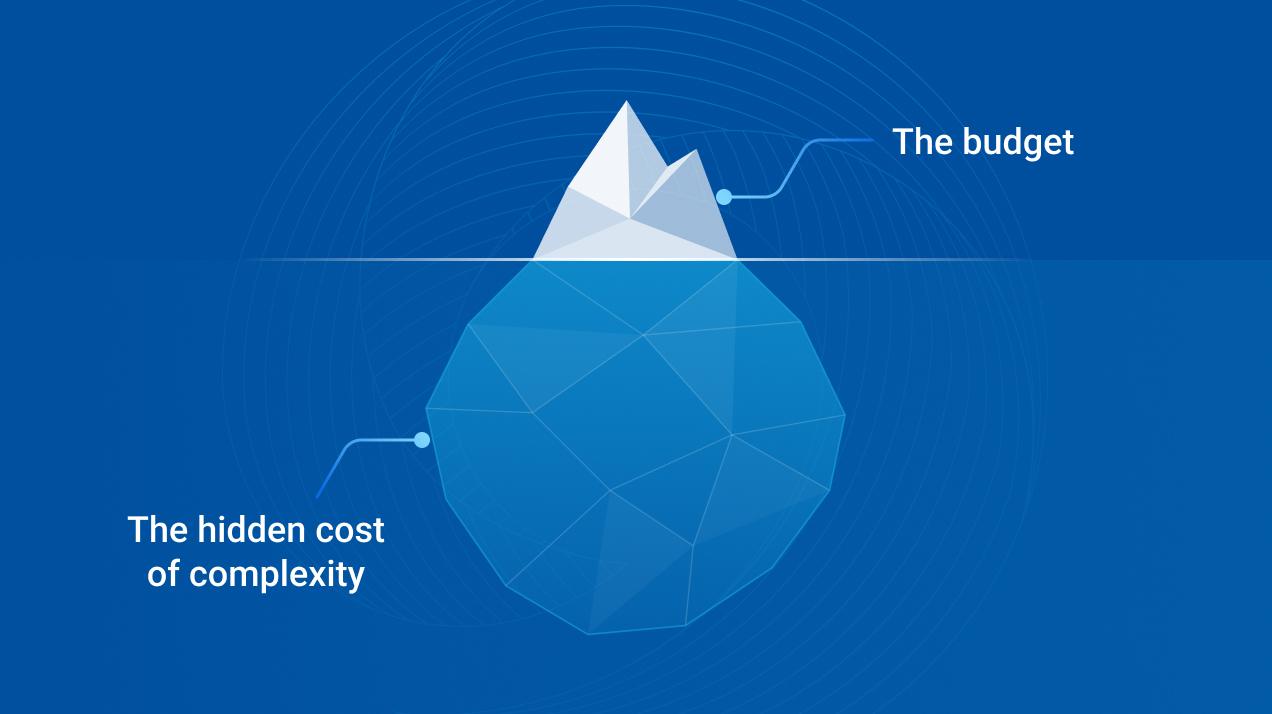
The opportunity is not to reduce the payroll budget without understanding what sits behind it. It is to identify where complexity adds expense and where simplification could create sustainable savings.
The payroll budget rarely tells the whole story
Internal payroll headcount, technology licences and provider fees are usually visible somewhere in the organisation’s budget. The cost of delivering payroll often extends further.
Payroll relies on HR, finance and IT resources. Technology costs can include integrations, infrastructure, upgrades, testing and Application Management Services (AMS). Organisations using Managed Payroll or local providers may still retain internal teams to prepare data, manage vendors, resolve exceptions and perform activities outside the provider scope.
For multi-country organisations, these costs can be distributed across payroll engines, providers, contracts, integrations, support arrangements and internal teams. Each component may look reasonable in isolation. The total cost of governing payroll across the organisation is much harder to see.
Understanding that total cost is the first step towards identifying the financial opportunity for transformation.
Where complexity adds cost
Manual work and rework
Manual data preparation, spreadsheets, reconciliations, duplicate activity and hand-offs between systems and teams all consume time. Corrections and rework create additional effort in every pay cycle. At scale, that effort becomes a recurring operating cost rather than an occasional inconvenience.
Errors and remediation
An underpayment or overpayment requires investigation, correction, reconciliation and employee communication. Systemic issues can lead to historical reviews, remediation work, specialist support and regulatory or legal action. A payroll environment that makes errors difficult to detect can therefore carry a cost well beyond the original mistake.
Fragmented delivery and coordination
Multiple providers, systems and country processes create coordination work. Someone must manage contracts, track service performance, align data formats, resolve ownership questions and connect issues across the delivery chain. Those activities may sit with HR, finance, IT or local payroll teams rather than appearing as payroll spend.
Technology and specialist dependency
Multiple systems, custom integrations and ageing platforms require resources to maintain, test and change. Payroll can also become dependent on a small number of experienced people who know how to keep complex processes running. The organisation then pays twice: once to maintain the current model and again when scarce expertise is needed to fix or change it.
Build a total-cost view before deciding what to change
A cost-led transformation should begin with evidence. Before choosing a platform, provider or delivery model, create a view of the work and resources required to run payroll today. A practical review should:
- Map the environment. List every payroll provider, engine, integration, internal team, contract and support arrangement across the countries in scope.
- Quantify the work. Estimate the time spent on data preparation, reconciliations, corrections, vendor management, exception handling and reporting.
- Separate the cost types. Distinguish recurring operating cost, one-off change cost, visible spend and capacity absorbed in other functions.
- Model the options. Compare how the cost, control and capability profile would change under in-house, hybrid and Managed Payroll models.
The exercise does not need false precision. A transparent estimate with clear assumptions is more useful than a narrow budget figure that omits the effort required to keep the wider environment working.
Let economics guide the operating model
The answer will differ by organisation. Some may find the strongest case in modernising and optimising an in-house payroll function. Others may benefit from a hybrid model that retains selected capabilities internally while using specialist support for defined activities. Managed Payroll may provide a stronger economic and capability case where fragmentation, scale or local expertise create a persistent burden.
There is no single lowest-cost payroll operating model. The right choice depends on the organisation’s workforce footprint, regulatory requirements, technology landscape, internal capability and desired level of control. The aim is to find the combination of people, processes, technology and services that delivers the required outcomes at the right total cost.
Cost is the catalyst, not the destination
A transformation initiated to improve the economics of payroll can produce benefits beyond the cost line. Removing manual work creates a stronger foundation for automation and AI-assisted controls. Simplifying technology and integrations makes payroll easier to change. Reducing dependence on scarce expertise improves resilience. Consolidating fragmented delivery improves visibility and accountability.
This is why cost can be a useful catalyst. The initial case may be financial, but the programme can also prepare the organisation for the next regulatory requirement, workforce change, acquisition or technology development.
Transform payroll on your terms
Payroll does not need to be failing for transformation to make business sense. If complexity is creating unnecessary cost, organisations can act proactively: understand the true economics of payroll, identify where simplification creates value and use that evidence to support the case for change.
The result should be a payroll function that costs less to run, is easier to govern and has the capacity to adapt when the organisation changes.